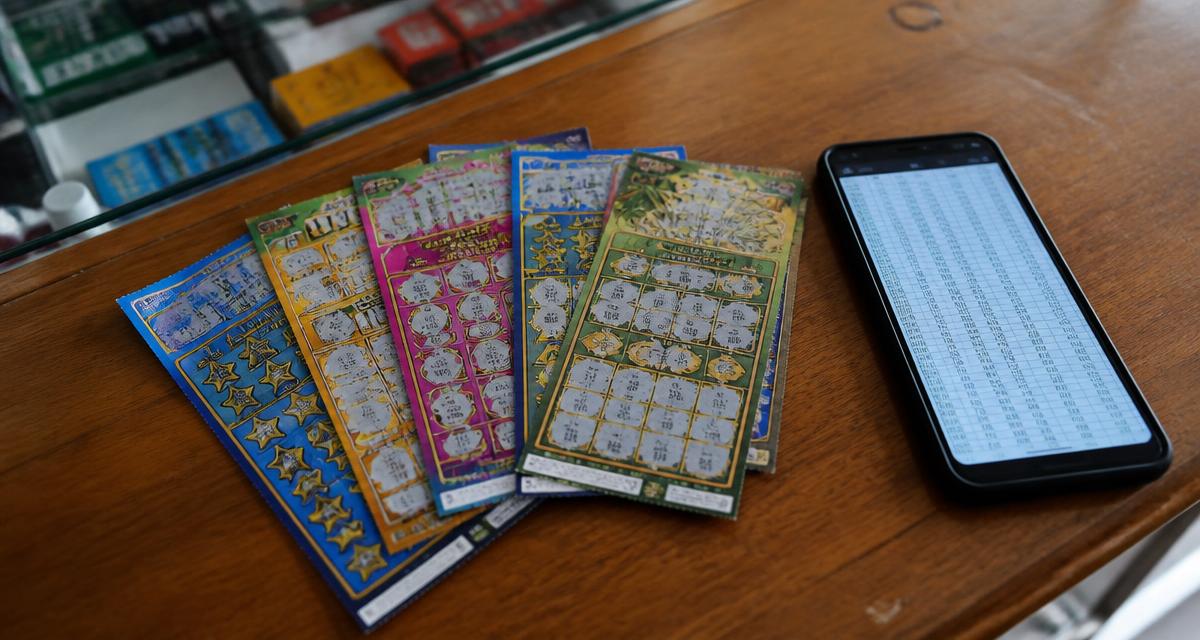
WPTV in West Palm Beach ran an investigation called “Scratch-off secrets revealed” (watch it here). The core finding is one most players never think about at the counter: instant games keep being sold after their advertised top prizes have already been won and claimed. The display still shows the big number. The ticket still prints the original odds. The prize behind it is gone.
Nothing about that is hidden — states publish the remaining-prize tables that prove it. It is simply not shown where the purchase happens. That gap between what is published and what is visible at the register is the whole story, and it is exactly the gap ScratcherStats is built to close.
Why games keep selling after the jackpot is gone
An instant game is a fixed print run. Millions of tickets are produced at once, with every prize — from the $2 payouts up to the headline jackpot — already printed and scattered through the run. Those tickets ship to thousands of retailers over months. When the last top prize is claimed, the remaining tickets are still physically in packs, in dispensers, in back rooms across the state.
Lotteries generally continue selling until the game is formally closed, which usually happens on a schedule rather than the moment the jackpot is claimed. The lower prize tiers are still live, so from the state’s point of view the game still “works.” From the buyer’s point of view, the reason they picked that game off the rack no longer exists.
What the printed odds do and do not tell you
The odds on the back of a ticket describe the game as printed: the full run, all prizes intact, day one. They never change, because they are a statement about the original print, not about the tickets left in the dispenser today. After six months of claims, the real game in front of you can be meaningfully different from the one on the back of the ticket — usually worse at the top, and sometimes better in a middle tier that nobody has cleared out.
ScratcherStats flags whether the top prize is still there
Every game on ScratcherStats carries its current top-prize status pulled from the state’s own published feed. When a state reports zero top prizes remaining, or marks the top prize as claimed, the game gets a “Top prize claimed” warning on its card — on the site and in the mobile app — so it is visible before you decide, not after you scratch.
- Top prizes remaining is shown as a live count, not a marketing figure.
- Claim-only games — still redeemable but no longer worth chasing for the jackpot — are labeled rather than quietly ranked alongside everything else.
- Expired games whose claim deadline has passed are removed entirely instead of lingering with stale numbers.
- Stale data is filtered. If a state stops reporting a game, it drops out rather than sitting there looking current.
That single flag answers the question the WPTV segment raises. You do not have to guess whether the jackpot on the display is real — you can check it in a few seconds.
How many tickets to buy, based on the prizes that actually remain
Knowing the top prize is gone is only half the answer. The other half is how many tickets it would take for the prizes that are left to show up.
ScratcherStats runs a nightly Monte Carlo simulation on every active game in the 26 states that publish tier-level prize counts. The simulation does not use the printed odds. It builds each game from the current remaining-prize table — every tier, including whatever top prizes are still unclaimed — and draws tickets from that live distribution. Then it reports a cluster size: the number of tickets from that one game at which the game’s real probability of a profit prize becomes meaningful rather than a coin flip.
Each game card shows the pieces of that recommendation:
- Cluster size — how many tickets of that game the simulation bought as one batch.
- Cluster cost — ticket price × cluster size, so you see the total spend before you commit to it.
- Probability of a profit prize in that cluster — where profit means a prize greater than the ticket price. Breaking even is a loss here, unlike on most sites.
- Expected longest losing streak — how many consecutive non-winners are normal inside a good game, so a cold run does not look like a broken ranking.
- Potential prize per ticket — weighted by what is still unclaimed, which is where a surviving top prize actually earns a game its rank.
A game with its jackpot intact and most of its mid-tier prizes untouched needs fewer tickets to be worth testing than a picked-over game of the same price. That difference is what the cluster number encodes.
What this does not mean
None of this makes a scratch-off a good investment. State lotteries keep roughly 30–40% of instant-ticket sales; every game carries a negative expected value by design, including the top-ranked one on any given day. Removing the games whose jackpots are gone and sizing your purchase to the prizes that remain improves the quality of the decision. It does not flip the math.
Scratch-offs are entertainment with a known cost. Treat the cluster cost as money you are prepared to lose in full, because most of the time you will.
The practical takeaway from the report
- Before buying, check whether the game’s top prize is still unclaimed — the display at the store will not tell you.
- Ignore the odds printed on the back; they describe the game on its first day of sale.
- Compare games on prizes remaining and simulated probability of profit, not on the advertised jackpot.
- Buy the recommended cluster from one game rather than single tickets from several.
- Check the cluster cost first and decide whether that number is acceptable to lose.
The WPTV piece is right that this is a secret only because nobody puts it in front of the buyer. The data has been public the whole time.