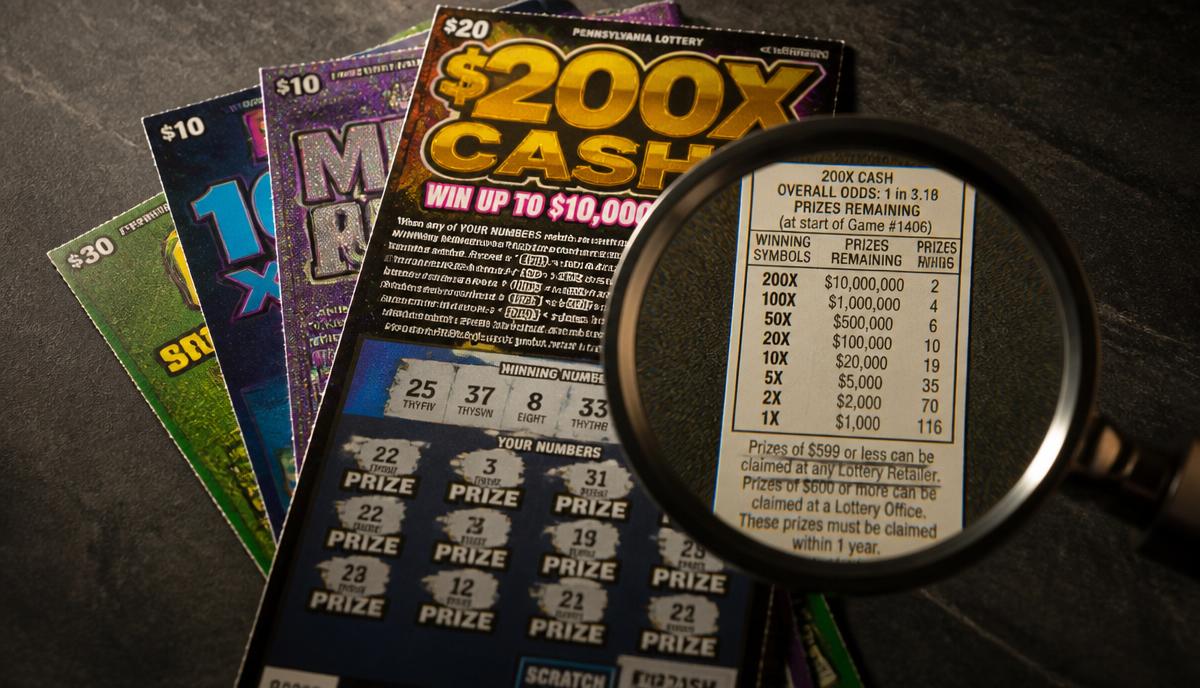
It is the most common assumption in scratch-off strategy: find the game with the most prizes still unclaimed and you have found the best game to play. We ran the numbers against every active scratch off we track, and the short answer is no — a high unclaimed count on its own does not mean better profit odds.
The correlation is weak, and it flips sign
For every active game in the 26 states we cover (Ohio excluded for data-quality reasons), we compared the percentage of prizes still unclaimed against the simulated probability of winning a profit prize — a prize worth strictly more than the ticket cost.
| Ticket price | Games | Correlation: % prizes left vs. profit probability | Avg. profit probability |
|---|---|---|---|
| $1 | 253 | +0.13 | 10.6% |
| $2 | 384 | −0.07 | 12.1% |
| $3 | 164 | +0.25 | 13.6% |
| $5 | 634 | +0.22 | 13.8% |
| $10 | 478 | +0.17 | 15.5% |
| $20 | 279 | +0.05 | 18.0% |
| $30 | 116 | −0.11 | 22.8% |
| $50 | 52 | +0.41 | 23.3% |
Most of those numbers sit between −0.1 and +0.25. In plain terms: knowing that a game has lots of prizes left explains only a few percent of the difference in its profit odds. The $50 tier is the one real exception, and it is also the smallest sample. Ticket price is a far stronger predictor than prizes remaining — profit probability roughly doubles from $1 to $50 regardless of how much of the prize pool is left.
Why the intuition breaks
Prizes and tickets get consumed together. When half the prizes in a game are gone, roughly half the tickets are gone too. The ratio that actually matters — prizes remaining divided by tickets remaining — barely moves for most of a game’s life. A game that is 80% sold with 80% of its prizes claimed is exactly as good as it was on day one.
The games where the ratio does move are the interesting ones, and they move in both directions. Losing tickets can get bought faster than winners (good for you) or winners can get cleared out early (bad for you). Raw “prizes remaining” cannot tell those two apart. That is precisely what the nightly simulation on the home page rankings is built to measure.
What happens to the mid-tier prizes when the jackpot is gone
The follow-up question is a sharp one: if the top prizes get claimed first, does the remaining prize pool shift toward mid-tier prizes — making a $100 or $500 hit more likely on an older game?
We grouped every prize tier across all active games by how large the prize is relative to the ticket cost, then measured how much of each band is still unclaimed:
| Prize band | Prize tiers | % of prizes still unclaimed | Remaining value |
|---|---|---|---|
| Top tier (1,000× cost and up) | 2,930 | 38.9% | $11.6B |
| Small profit (1–10× cost) | 10,509 | 34.7% | $26.6B |
| Upper mid (100–1,000×) | 2,811 | 33.2% | $0.9B |
| Mid tier (10–100×) | 6,621 | 32.2% | $3.6B |
| At or below ticket cost | 4,543 | 5.0% | $4.6B |
Two things stand out. First, the profitable bands all drain at nearly the same rate — 32% to 39% left. There is no meaningful pocket of neglected mid-tier prizes waiting to be scooped up. Second, the “at or below ticket cost” band is almost empty at 5% remaining, because those are the small break-even wins players redeem instantly. Break-even tickets recycle fast; real prizes do not.
So the mid-tier prizes do become a larger share of what is left once a jackpot is claimed — but only because the numerator shrank, not because your per-ticket chance of hitting one went up. The tickets are disappearing alongside the prizes.
Games with the top prize already claimed
We split active games by whether any top prize is still available:
| Group | Games | Avg. profit probability |
|---|---|---|
| Top prize still available | 1,900 | 14.9% |
| Top prize gone | 481 | 14.2% |
The gap is under one percentage point. Losing the jackpot barely dents the odds of an ordinary profitable ticket, because the top prize was never a realistic outcome for a normal buyer in the first place. What it does destroy is the upside — the reason most people bought the ticket. At the $30 and $50 price points, the correlation between top prizes remaining and profit probability is actually negative (−0.27 and −0.31), which is why we keep the “top prize claimed” warning as a separate flag rather than folding it into the game score.
What to use instead
- Rank by simulated profit probability or expected value. That is what the home page and the simulation page do — they account for how prizes and tickets deplete together.
- Treat “lots of prizes remaining” as a supporting signal, not the deciding one. It is worth a tiebreaker, not a strategy.
- Watch the trend, not the snapshot. The trends page shows whether a game’s prize ratio is improving or decaying over the last 30 days, which is the part raw counts miss.
- Check whether the top prize is gone if the jackpot is why you are buying. It will not change your odds much, but it changes what you are playing for.
Related reading: